
The eruption without warning
Not every volcano announces its return to activity. Shortly before midnight on 28–29 March 1982, El Chichón in Chiapas erupted without warning and with unexpected force. Two further eruptions followed at the beginning of April. Because there had been no warning, villagers in the surrounding area had little time to evacuate. The working text records that approximately 2,000 people lost their lives as a result of the disaster.
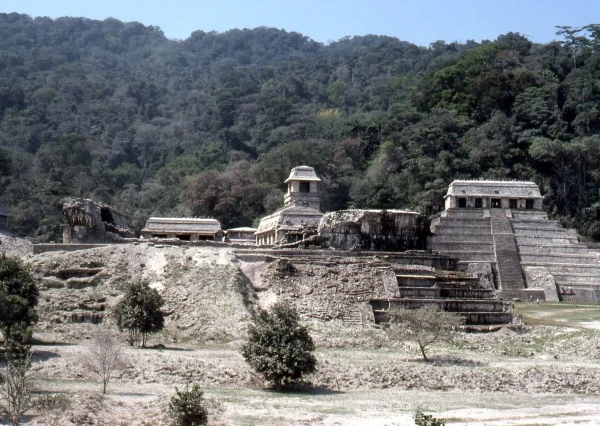
Ash from El Chichón fell over a wide area of southern Mexico. The Maya ruins of Palenque, approximately 26 kilometres away, were also covered. Concern quickly focused on what might happen if the ash mixed with rain and formed an acidic solution capable of damaging the site’s delicate and intricately carved stone surfaces. Workers therefore began an extensive cleaning of the pyramids and temples while ash was still falling.
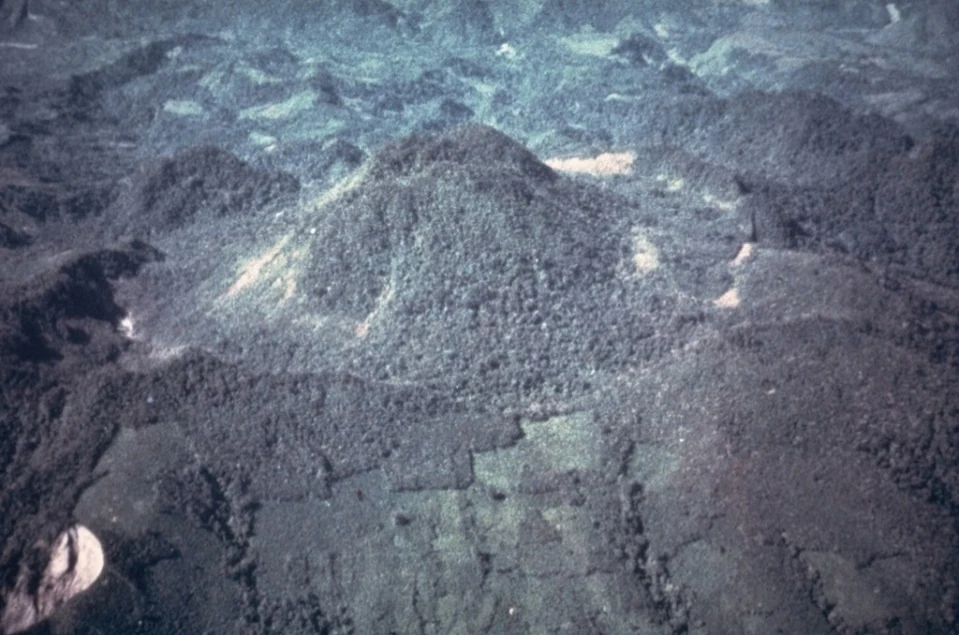
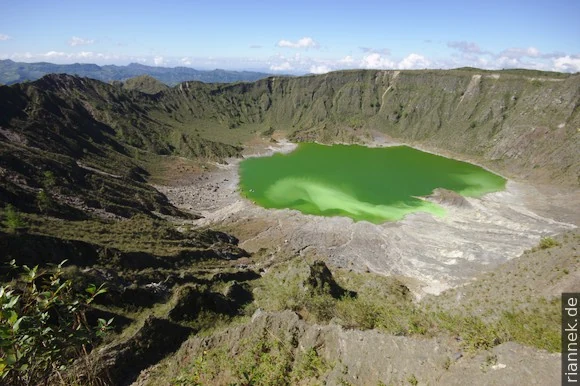
Volcanologists later determined that the volcano’s previous eruption had taken place about 1,200 years earlier. After the 1982 eruption, the collapse of the dome into the crater left a green, sulphurous and acidic lake that filled with water.
“Outside it is pitch dark.”
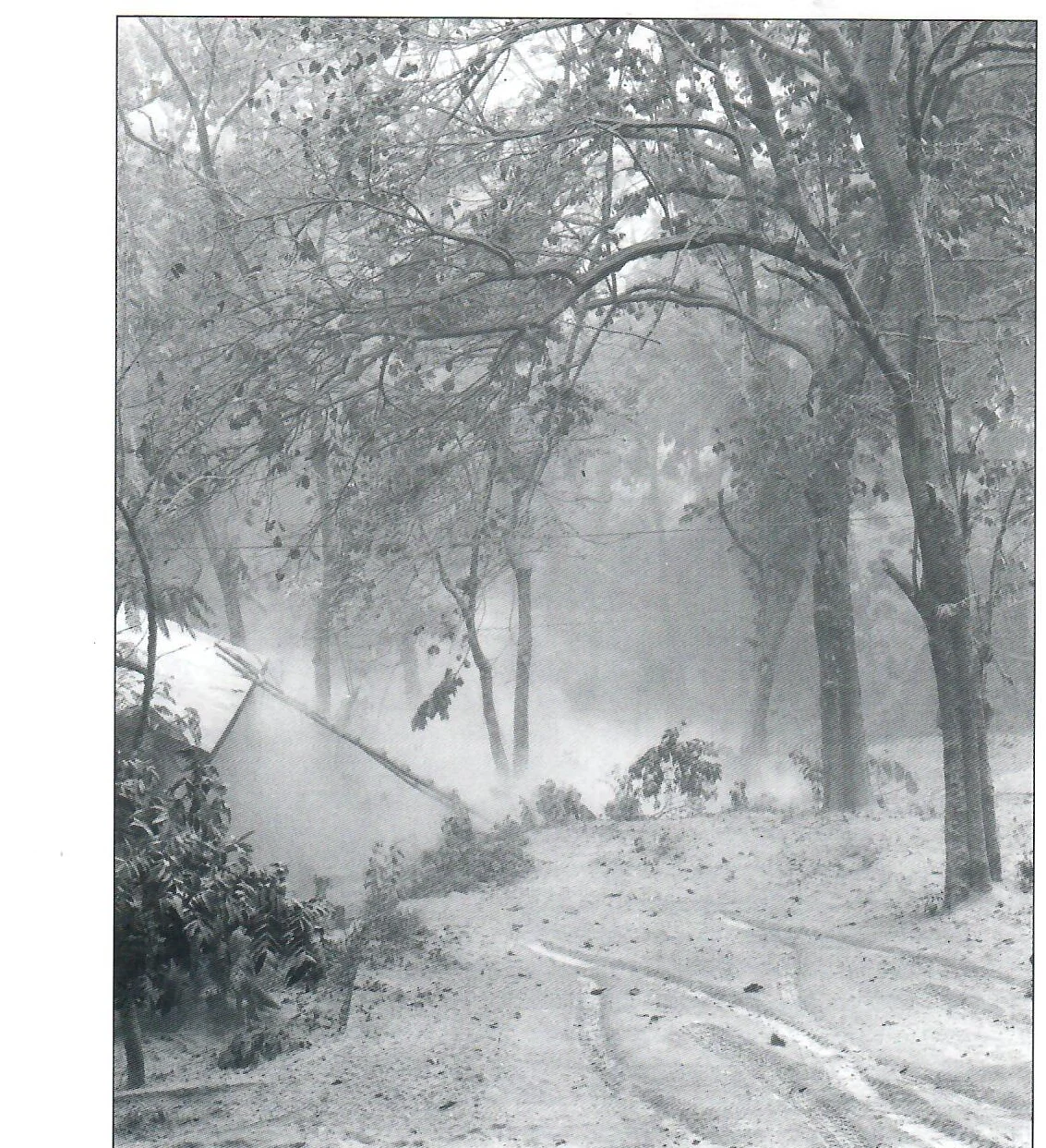
Merle Greene Robertson’s notes preserve the human shock of the event: darkness at midday, ash entering the house, and an ancient city suddenly coated in white.
The opening section now combines narrative, documentary image material and key facts, so the historic drama of the eruption becomes visible before the broader archive unfolds below.
Volcanic context
A cloud that travelled around the world
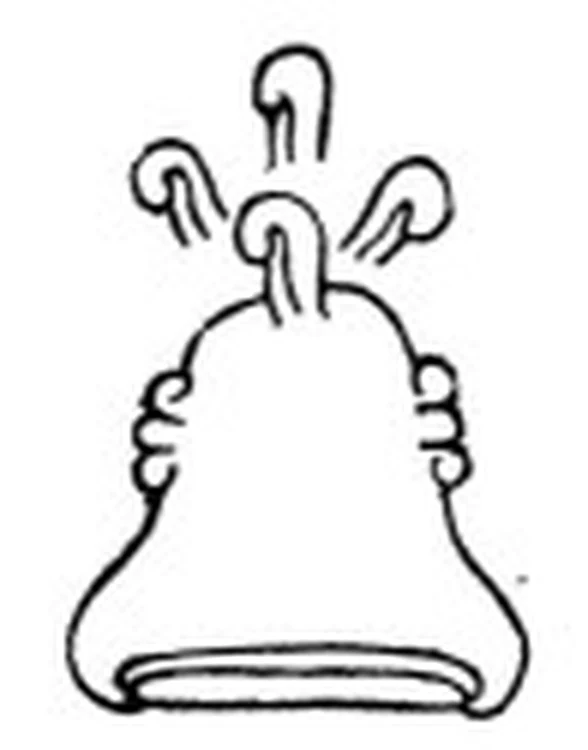
El Chichón drove more than seven million tonnes of sulphur dioxide and approximately twenty million tonnes of particles into the stratosphere. The resulting cloud of volcanic gases travelled around the Earth within three weeks and was still dispersing three years later. It was expected that the additional atmospheric particles would reduce the amount of solar radiation reaching the surface and make the following summer unusually cool. In the same year, however, an El Niño event began and offset any significant cooling attributed to the volcanic particles.
The working text describes the El Chichón eruption as one of the largest volcanic eruptions of the twentieth century in terms of gases and particles reaching the stratosphere, surpassed by the eruption of Mount Pinatubo in 1991. Ash fell across a broad area extending from Campeche to San Cristóbal de las Casas in Chiapas. By the time the eruption was over, the volcano—whose summit had stood at 1,260 metres before the event—had lost roughly 200 metres in height.
Merle Greene Robertson recorded the earthquakes and the eruption from her house, Na Chan-Bahlum, in Palenque. Her diary captures the strange darkness, the ash entering the house and the shock of seeing the archaeological zone transformed almost overnight.
“Outside it is pitch dark.”
On 4 April 1982, Palm Sunday, Robertson wrote by candlelight in the middle of the afternoon. Outside, she noted, it was completely dark. She recalled that a week earlier she had risen at six in the morning to find the day as dark as the middle of the night. Moises Morales stood at the door holding a handful of grey, powder-like material. It was ash from a pick-up truck that had left Pichucalco at around 1:30 a.m. as fire burst from the mountain. Eighteen people were travelling in the vehicle, and both the truck and its passengers were covered in thick ash.
At first, only a little ash fell in Palenque and then stopped, leading people to believe that the danger had passed. News soon arrived that two towns had been buried. Robertson recorded reports of badly burned victims being taken to hospitals in Villahermosa.
Her diary entry for 5 April describes the worst day after the eruption: there was only a little daylight, while a violent storm of white ash continued throughout the day and night. Ash entered the house through every crack in the windows and accumulated on window ledges, cupboards and floors.
Eyewitness impressions
Palenque in white
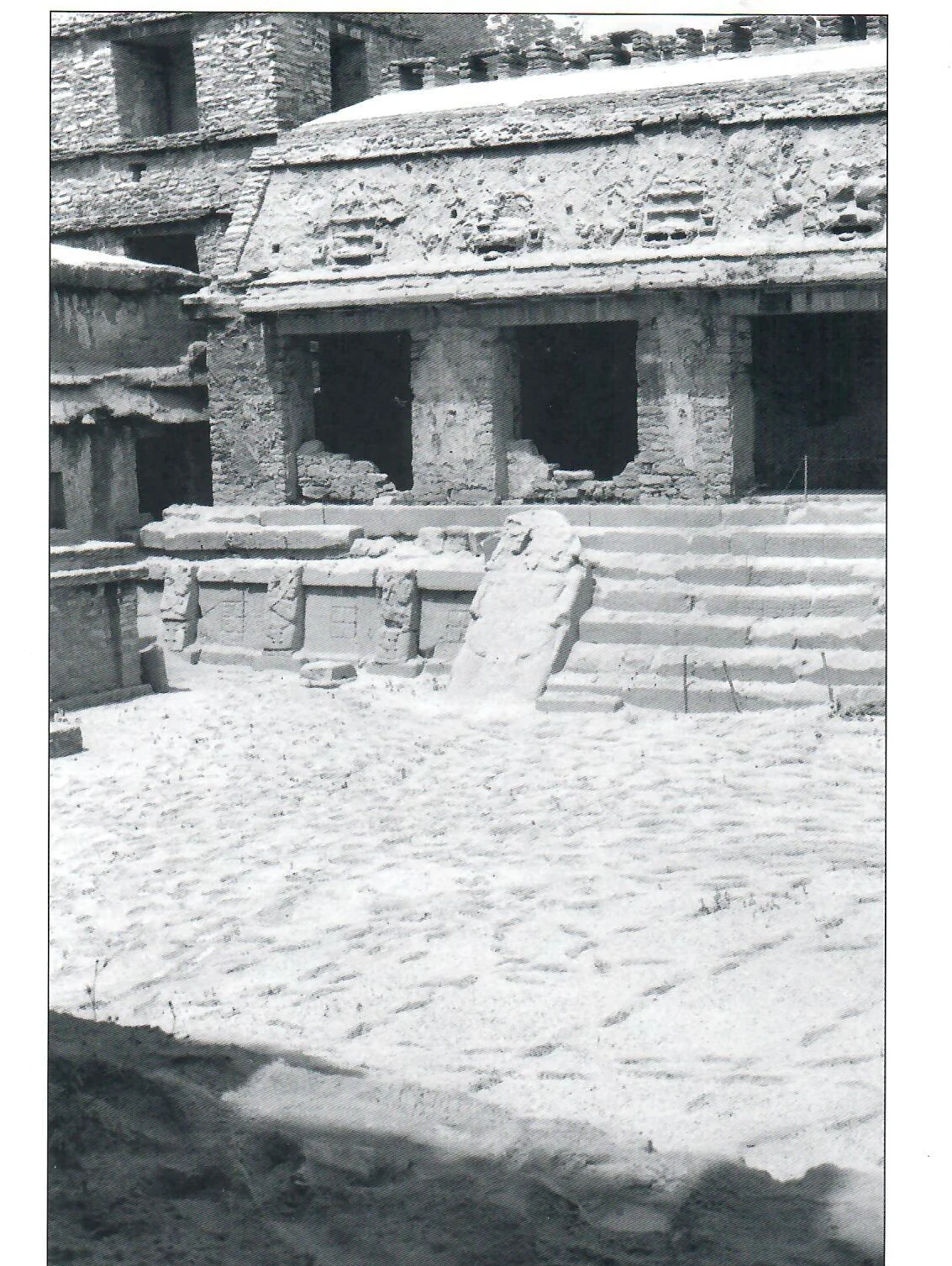
Robertson later walked to the ruins and photographed what she saw. The Eastern Court, she wrote, was astonishingly beautiful under the thick white covering. The layer of ash softened the contours of monuments and open spaces until the architecture appeared almost as a single sculptural mass. The masks of House C looked like white plaster casts set into the walls, and the roof was transformed in the same way.
The beauty of the scene concealed an urgent structural problem. Workers were already shovelling ash from the steps of the Temple of the Inscriptions, while trucks were expected to remove the accumulated material. According to the account, the roofs of individual temples were estimated to be carrying around ten tonnes of ash. Their stability was therefore a serious concern, and workers began clearing the roofs from the earliest stages of the emergency.
Architectural details beneath the ash
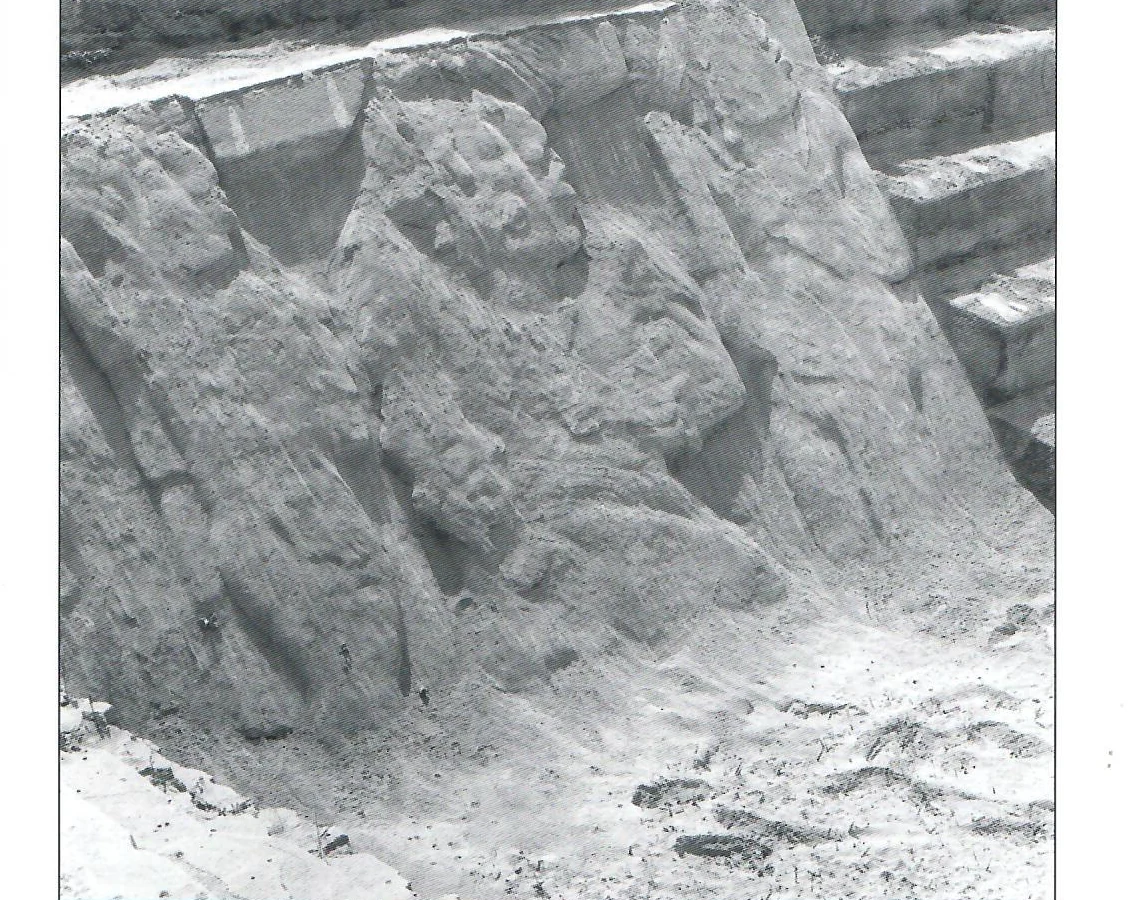
Robertson photographed the North Group and other parts of the site. She anticipated that comparisons with her earlier colour slides would be extraordinary, because the eruption had stripped the landscape of almost every visible trace of colour. In her words, everything had become white.
This English article is adapted from Rolf Becker’s German working text “Palenque unter der Asche des Vulkans El Chichón.” The eyewitness passages are based on the diary material credited in that document to Merle Greene Robertson, “Palenque During the Eruption of El Chichonel,” Human Mosaic, Vol. 19, Nos. 1 & 2, pp. 42–62.